PuroSPIN™ NanoElute™ Gel Extraction Kit
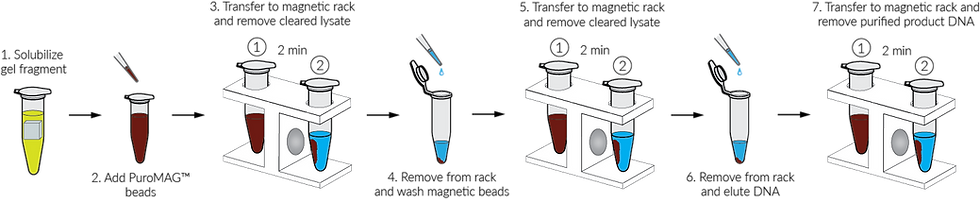
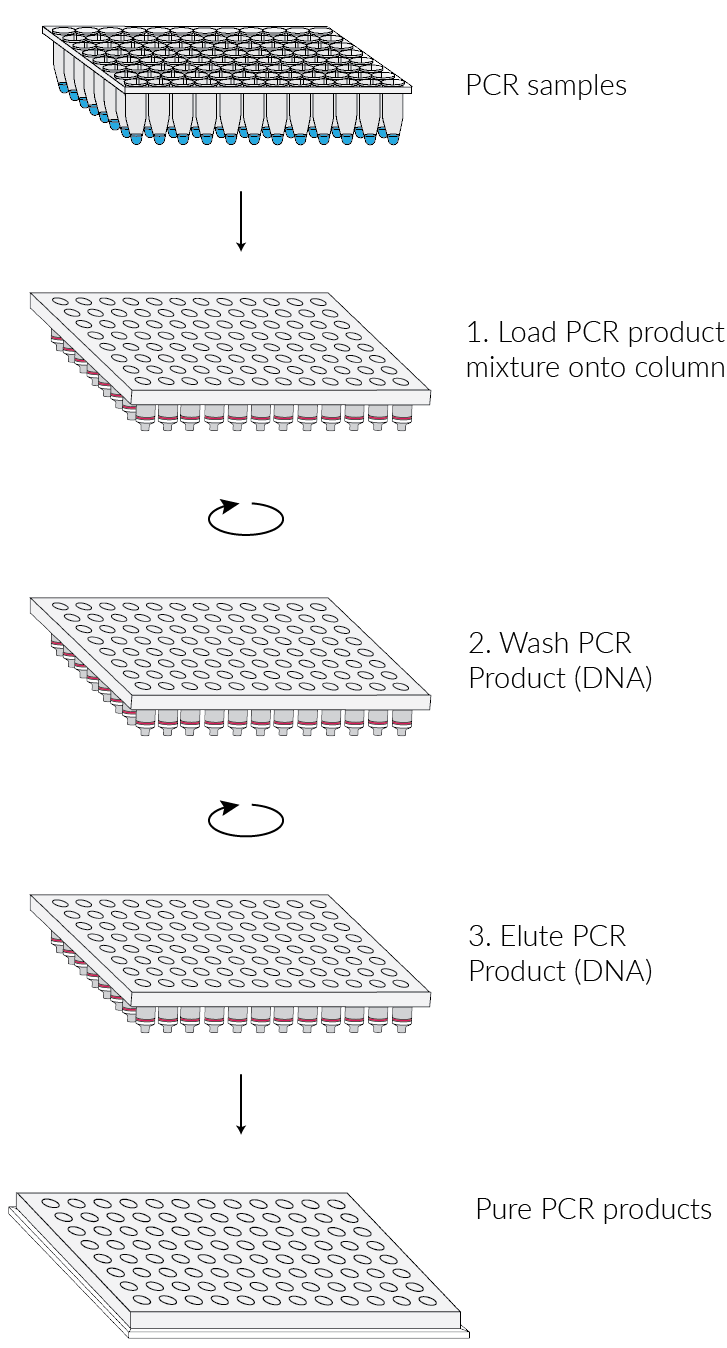
The PuroSPIN™ NanoElute™ Gel Extraction Kit is a low-elution-volume gel extraction kit for simple extraction and purification of DNA fragments (100 bp – 10 kb) excised from agarose or polyacrylamide (PAGE) gels. Its special binding buffer includes a pH indicator that gives a visual check of optimal DNA binding conditions on the silica spin column.
Why NanoElute
Compared with our standard PuroSPIN™ Gel Extraction Kit, the NanoElute version uses Nano silica spin columns instead of mini silica columns. Nano columns give the highest possible concentration of purified DNA fragments, because the elution volume can be as little as 6 µL. Thanks to the column's high binding capacity, the kit can process large amounts of starting DNA (up to 10 µg), yet, unlike the standard kit, as little as 50 ng of DNA can be processed with great recovery and product quality.
Key features
- Rapid purification of DNA fragments from standard agarose gels run in either TAE or TBE buffer
- Unique Nano silica spin columns maximize the concentration of DNA purified from small sample amounts
- Simple extraction process with no need for phenol or chloroform
- Efficient removal of dNTPs, primers, enzymes and salts from PCR reaction mixtures and gel mixtures
- High-quality DNA for sequencing, ligation, transformation, transfection, Southern blotting, qPCR or microarray analysis
Available sizes
- 50 preps – NK307-50
- 250 preps – NK307-250
Available in Canada from Luna Nanotech, Markham, Ontario. Prices are in CAD; contact us for bulk or institutional quotes.
Product Manuals
Materials Safety Data Sheets (MSDS)
Product Data Sheet
Product Specifications
Kit Type: Gel DNA Fragments Purification Kit Format: Silica Spin Columns Kit Scale: NANO Processing Time: < 20 minutes Starting Amount: up to 15 μg Elution Volume: 6 - 20 μL Typical Recovery: 70 - 90 % Processing Mode: Manual, centrifugation/vacuum DNA Size Range: 100 bp - 70 kbp Ratio A260/A280: 1.7 - 1.9 Ratio A260/A230: 1.8 - 2.2 Downstream Applications: Ligation, microarray analyses, qPCR, RT-qPCR, sequencing, Southern blotting, transfection, transformation, etc.